
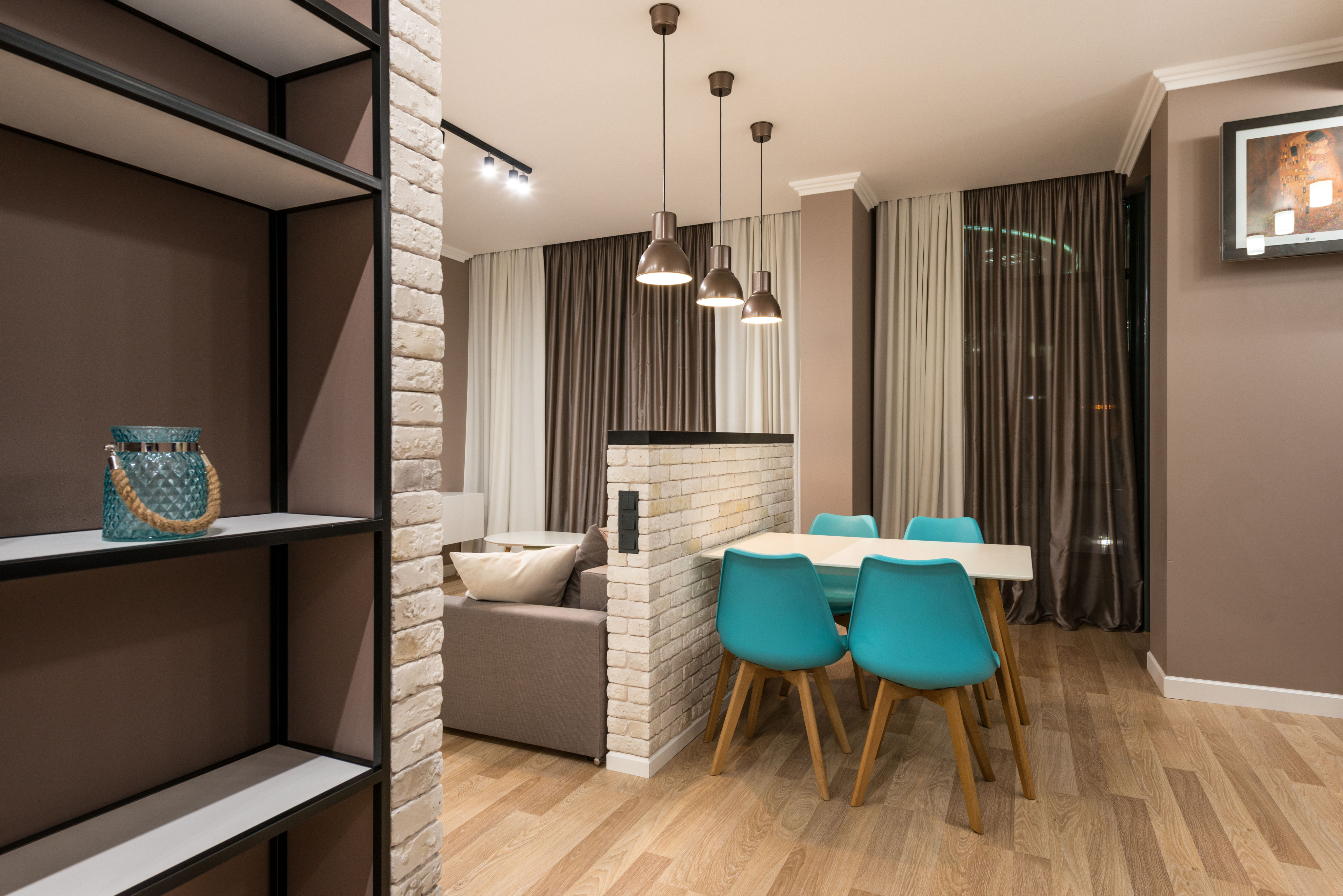
Quick Answer: Learning how to create separate zones in a studio apartment comes down to one idea: split the single room into purpose areas for sleeping, working, and relaxing, then use furniture and rugs to keep those areas apart. Float a sofa, hang a curtain, or slot in an open shelf to mark where one zone ends and the next starts.
A studio hands you the whole apartment in one open room. That is freedom right up until dinner is happening three feet from your pillow. The good news is that the fix isn't square footage, it's better boundaries. Knowing how to create separate zones in a studio apartment turns one room into distinct areas for sleep, focus, and downtime, no contractor required. At the all-bills-paid studios in Houston's Energy Corridor, you can even light and cool each corner freely because utilities are already covered.
What Zoning Means for the Layout of a Studio Apartment
Zoning means assigning each part of your open floor plan a single job. Instead of one blurry room, the layout of a studio apartment becomes a sleeping corner, a living area, a workspace, and a small entry. You define those areas with furniture placement and visual cues, not permanent walls, so the space still feels open and bright.
Most studios are not huge, so every choice counts. The average U.S. studio measured 457 square feet in 2024, according to RentCafe data drawn from Yardi Matrix in February 2025, up 13 feet from the year before. Studios and one-bedrooms now make up more than half of newly built units, per that same analysis, so plenty of renters are solving this exact puzzle. The best apt layouts for a room that size start by grouping furniture into corners instead of pushing everything flat against the walls, which only makes the middle feel like a hallway.
Which Room Dividers for Studio Apts Actually Work?
The best dividers pull double duty and come apart when you move. Room dividers for studio apts fall into two camps: solid pieces that block sightlines, like a bookcase or a folding screen, and soft cues that only suggest a boundary, like a rug or a curtain. Renters usually lean toward the second camp, because nothing gets drilled and nothing needs a landlord's sign-off. How much privacy you want between the bed and the couch decides which way you go.
Freestanding Partition for Studio Apartment Options
A freestanding piece is the workhorse divider. An open-back cube shelf, the kind you can reach into from both sides, is the most popular partition for studio apartment layouts, because it splits the room and swallows storage at the same time. A folding screen does a similar job for less money and folds flat when guests arrive. Renters searching for a studio flat partition are usually after exactly this: a screen for the bed that never touches the walls.
Soft Dividers That Keep the Light
Curtains are the renter's secret weapon. Mount a track or a tension rod across the ceiling, and a panel of fabric closes off the bed at night, then slides away by morning. Sheer fabric keeps daylight moving through the room instead of trapping it in one corner. Bookshelves work here too, just leave the back open so the panels do not turn into a solid wall. Area rugs pull off the quietest version of the same trick. Drop one under the bed and another beneath the sofa, and your eye reads two rooms even though the floor never changed.
One warning about the permanent route. A half wall or a pressurized, floor-to-ceiling partition creates a true separate room, but it is rarely a renter move. These usually need landlord approval, have to clear local fire and building codes, and often call for a professional to install, so most studio dwellers come out ahead with a divider that lifts out on moving day.
Room Dividing Ideas for a Studio Apartment That Double as Storage
The smartest room dividing ideas for a studio apartment earn their footprint twice. A divider that only blocks a view wastes space you cannot spare, so pick pieces that also hold your things. A cube shelf keeps books on one side and folded clothes on the other. A storage bench marks the end of the entry and hides shoes underneath. A sofa with a deep back can face the living area while its spine draws the line to the bedroom. Here is how the common options stack up for a rental.
| Zoning method | Privacy level | Adds storage? | Renter-friendly? |
|---|---|---|---|
| Area rug | Visual only | No | Yes, zero commitment |
| Folding screen | Low to medium | No | Yes, folds and moves |
| Ceiling-track curtain | Medium to high | No | Yes, removable rod |
| Half or pressurized wall | High | No | No, needs approval |
| Open cube shelf | Medium | Yes | Yes, freestanding |
Studio Storage That Pulls Its Weight
Vertical space is free real estate. Shelves that climb toward the ceiling add studio storage without stealing a single square foot of floor, and a tall unit doubles as a divider when it stands between two zones. Look under the bed too. A platform frame with drawers, or simple bins tucked below, keeps off-season clothes out of sight. Wall hooks and a slim console by the door handle keys, bags, and mail without eating into the room. Beyond your own four walls, the shared amenities at the property give you more room to spread out when the studio starts to feel tight.
Studio Apartment Space Saving Ideas for Small Footprints
Multifunctional furniture is where small spaces win. A Murphy bed folds up into the wall and hands the floor back to your living zone during the day. A storage ottoman works as a footrest and a hidden chest at once. A drop-leaf table that folds down when you are not eating frees up the same floor for a yoga mat or a desk chair. These studio apartment space saving ideas matter most in the sleeping and living zones, where a single piece often has to cover two jobs.
Frequently Asked Questions
1. How do you divide a studio apartment into separate rooms?
You divide it with furniture and light barriers rather than construction. A few reliable moves:
- Float a sofa or bookcase to break the sightline between areas
- Hang ceiling curtains around the bed for a private sleeping nook
- Lay separate rugs to anchor the living and sleeping zones
- Point a desk away from the wall to carve out an office corner
2. What is the best room divider for a studio apartment rental?
An open-back cube shelf is the top pick for most renters. It blocks the view between two zones, adds real storage, stands on its own with no drilling, and moves out with you. If you want more daylight to travel through the room, swap it for a ceiling-mounted curtain instead.
3. Will a room divider make my studio feel smaller?
It can, if you pick the wrong one. Solid, floor-to-ceiling dividers in dark colors close a room in fast. Open shelving, sheer curtains, and low furniture do the opposite. They define zones while light and sightlines still travel across the space, so the studio reads organized instead of cramped.
4. How do you arrange furniture in a small studio?
Start from the biggest piece and work outward. Place the bed first, usually in the corner farthest from the door, then set the sofa to face the living zone with its back toward the bed. Keep walkways clear and let a rug mark each area. Group things into corners, not along every wall.
5. Can I set up a work-from-home zone in a studio apartment?
Yes, and it is worth the effort for focus. Put a compact desk perpendicular to a wall so its edge forms a boundary, and face it away from the bed. A small shelf or a plant beside it signals a separate office. Good task lighting keeps the corner feeling like its own room.
Bringing It All Together
You do not need walls to live well in one room. Once you know how to create separate zones in a studio apartment, a rug, a shelf, and a well-placed sofa can turn open square footage into a home that sleeps, works, and unwinds on cue. If you are shopping for a studio to make your own, browse the available studio floor plans at The Passages at Rye 1255 in the Energy Corridor, then apply online once you find the layout that fits how you live.