
Quick Answer: Hurricane season prep for Houston renters starts with knowing your evacuation zip zone and stocking five to seven days of water, food and medicine. Then protect your belongings with renters and flood coverage. Do it before June 1, because shelves empty fast once a storm shows up in the Gulf.
Hurricane season prep for Houston renters is easier than most people think, and the season officially closes on November 30, which makes the quiet months the smartest time to restock. If you live in the Energy Corridor near Highway 6 and I-10, a storm doesn't need to hit Houston directly to knock out power for days. At The Passages at Rye 1255, serving renters across West Houston and the Energy Corridor, we put together this plain-English guide so you're ready before the next forecast cone points our way.
What to Look For in a Houston Hurricane Season Plan
A good plan for the Houston hurricane season answers four questions: where you'll get alerts, whether your zip code is ever told to evacuate, what you'll live on if the power goes out, and how you'll prove what you lost. Renters don't need to board windows or buy a generator. You need good information and a kit you can grab in five minutes.
The Atlantic season runs from June 1 to November 30, according to the National Hurricane Center. Peak activity lands in August and September.
Wind isn't the only threat. In July 2024, Hurricane Beryl came ashore as a Category 1 storm near Matagorda, and local reporting put CenterPoint's peak outage above 2.2 million customers, with hundreds of thousands still waiting for power days later in triple-digit heat. That's the scenario most Houston renters should plan around: not a direct hit, but a long, hot blackout.
Know Your Zip Zone
Harris County and its neighbors order evacuations by zip zone (Coastal, A, B and C), based on storm surge risk. Inland zip codes are generally asked to shelter in place and keep roads clear for coastal evacuees. Look up your own zip code on the Ready Harris zip zone map each spring, since zones and routes are reviewed before every season. Want to picture your exits? Our neighborhood map and directions page shows how close I-10 and Highway 6 sit to the community.
Download a Hurricane Application Before You Need It
The free FEMA App sends National Weather Service alerts for up to five locations, so you can track your apartment, your workplace and family elsewhere in Texas. It's available in English and Spanish. Pair that hurricane application with Ready Harris Alerts and the local alerts listed on FEMA's mobile app page. Then turn on Wireless Emergency Alerts in your phone settings.
What Should Go in a Hurricane Emergency Kit?
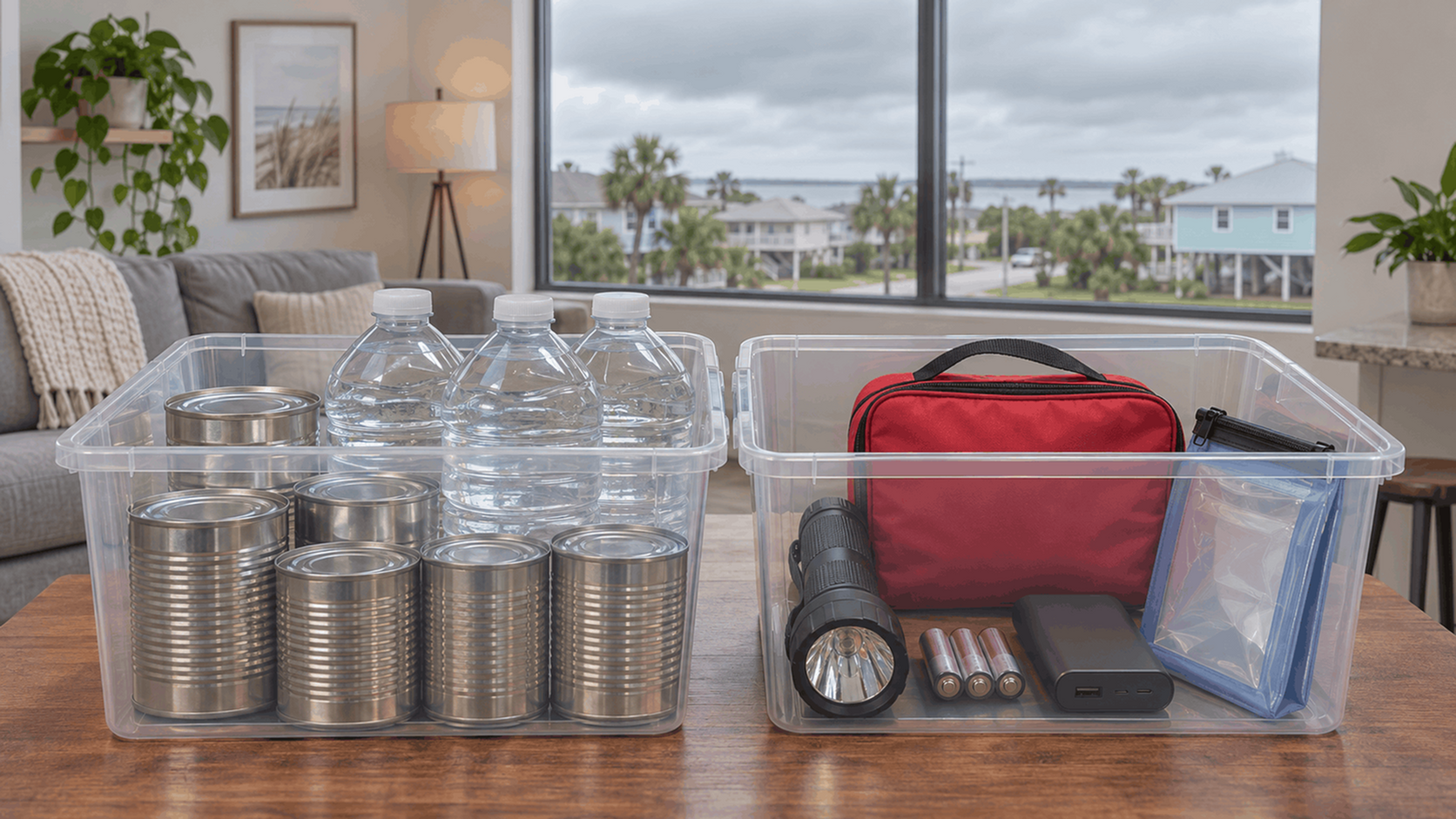
A hurricane emergency kit should cover at least five to seven days without power or store access. The City of Houston's Ready Houston kit list recommends one gallon of water per person per day, non-perishable food, medications and copies of important documents in a waterproof container. Studio renters can fit all of it in two plastic bins.
- Water: one gallon per person per day, plus one gallon per pet per day
- Food: canned meals, peanut butter, crackers and a manual can opener
- Power: flashlights, extra batteries and a charged portable phone battery
- Health: a two-week supply of prescriptions and a basic first-aid kit
- Papers: lease, ID, insurance policy and a few photos of your belongings
- Cash in small bills, since card readers fail when the grid does
Rotate the water and food once a year. A good reminder date is the end of the season, right around Thanksgiving, when hurricane season prep for Houston renters can happen without crowded stores or empty water aisles.
Hurricane Supplies and Texas Hurricane Preparation on a Budget
Texas hurricane preparation gets cheaper if you shop the state's Emergency Preparation Supplies Sales Tax Holiday. In 2026, it ran April 25 through 27, and the Texas Comptroller lists which hurricane supplies qualify, including batteries, flashlights and portable generators under $3,000. Check that page in early spring for next year's dates. One caveat: tents, cleaning supplies and toilet paper don't qualify.
How Do Renters Use a Storm Preparation Checklist Before Landfall?
A storm preparation checklist works best when it's broken into stages, because a watch and a warning call for different actions. A watch means hurricane conditions are possible within about 48 hours. A warning means they're expected within about 36 hours. Use the table below as your hurricane checklist and save it on your phone. It's the core of hurricane season prep for Houston renters, and it fits on one screen.
| Stage | What Renters Should Do |
|---|---|
| Before June 1 | Check your zip zone, build the kit, review renters and flood coverage, photograph belongings |
| Storm in the Gulf | Refill prescriptions, fill your gas tank at least halfway, get cash, charge every device |
| Hurricane watch | Bring in patio and balcony items, freeze water bottles, move valuables off the floor |
| Hurricane warning | Shelter in an interior room away from windows, or leave if your zip zone is ordered out |
| After the storm | Avoid floodwater, photograph damage, report repairs to management and file insurance claims |
Don't skip the insurance line. Your landlord's policy covers the building, not your couch or laptop. Standard renters policies usually exclude flood damage, and a renters policy through the National Flood Insurance Program typically has a 30-day waiting period, per FloodSmart.gov. Buying coverage when a storm is already named is usually too late.
After the storm passes, report leaks, broken windows or water intrusion through the resident maintenance portal with photos attached. Dated photos help both your repair request and your insurance claim.
Frequently Asked Questions
1. When does Houston hurricane season start and end?
The Atlantic hurricane season runs from June 1 through November 30 every year, according to the National Hurricane Center. Storms can form outside those dates, though it's rare. For Houston, the highest-risk stretch is usually August and September, so finish your kit and insurance review well before summer heats up.
2. Do I need to evacuate if I live in West Houston?
Not automatically. Harris County evacuates by zip zone based on storm surge risk, and inland residents are usually asked to shelter in place so coastal residents can get out. Check your zip code on the Ready Harris zip zone map each year and follow local officials' orders, not social media rumors.
3. What hurricane supplies do renters actually need?
Renters need a smaller, more portable kit than homeowners. Focus on these basics:
- Five to seven days of water and non-perishable food
- Flashlights, batteries and a portable phone charger
- Prescriptions, first-aid supplies and pet food
- Copies of your lease, ID and insurance documents
4. Does renters insurance cover hurricane damage?
Renters insurance often covers wind damage to your belongings, but most standard policies exclude flooding. Flood coverage for contents is sold separately, including through the National Flood Insurance Program. Those policies usually take 30 days to start, so buy one early and confirm the details with your insurance agent.
5. What is the best hurricane preparedness Houston renters can do for free?
Sign up for Ready Harris Alerts, download the FEMA App, look up your zip zone and take a video walkthrough of your apartment showing everything you own. None of it costs money. Saving your landlord's emergency contact and the maintenance portal link on your phone helps too.
Conclusion
Hurricane season prep for Houston renters comes down to a few habits you repeat each year: check your zone, refresh your kit, confirm your coverage and keep your documents somewhere dry. Do it now, while the Gulf is quiet. If you have questions about storm procedures at the community, send the leasing team a message through the resident portal before the next season starts. A little planning in the off-season makes the next Houston storm a lot less stressful.