Quick Answer: In a studio vs. 1-bedroom apartment matchup, a studio saves you money and is easier to maintain, while a one-bedroom buys privacy and a separate space to sleep or work. For solo renters in Houston on a tight budget, a studio usually makes the most sense, especially with utilities included.
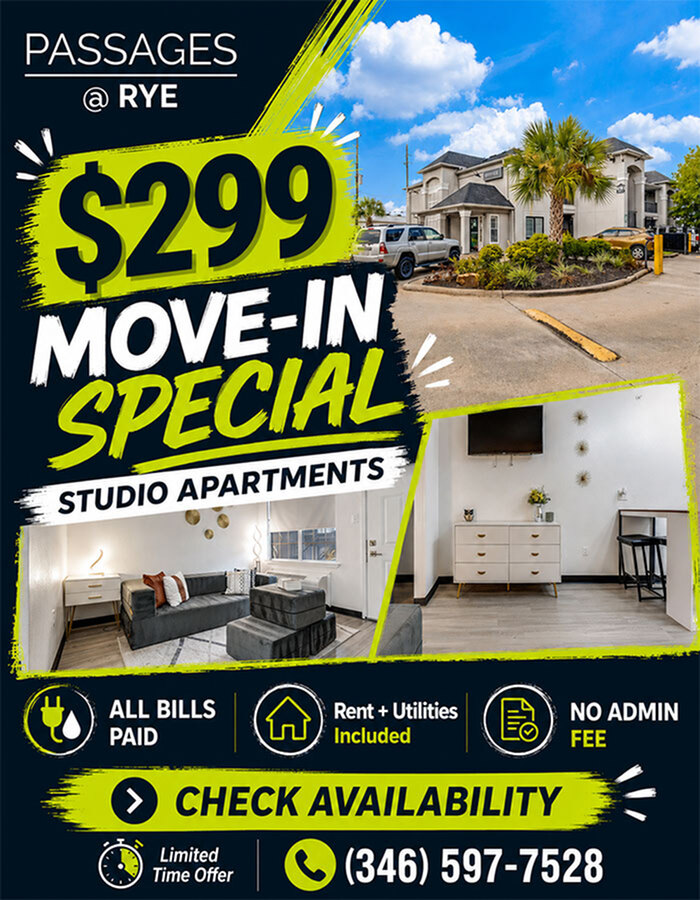
The Passages at Rye 1255 offers gated, all-bills-paid studios serving the Energy Corridor and West Houston, so a studio vs. 1-bedroom apartment decision here really comes down to two things: your budget and how you actually live. Both layouts are common in this market, and neither is automatically the smarter pick. Houston studios average around 508 square feet. One-bedrooms run closer to 730. Browse the current studio floor plans if a smaller footprint already fits your plans, or keep reading to weigh both side by side.
What to Look For When Comparing a Studio vs. 1-Bedroom Apartment
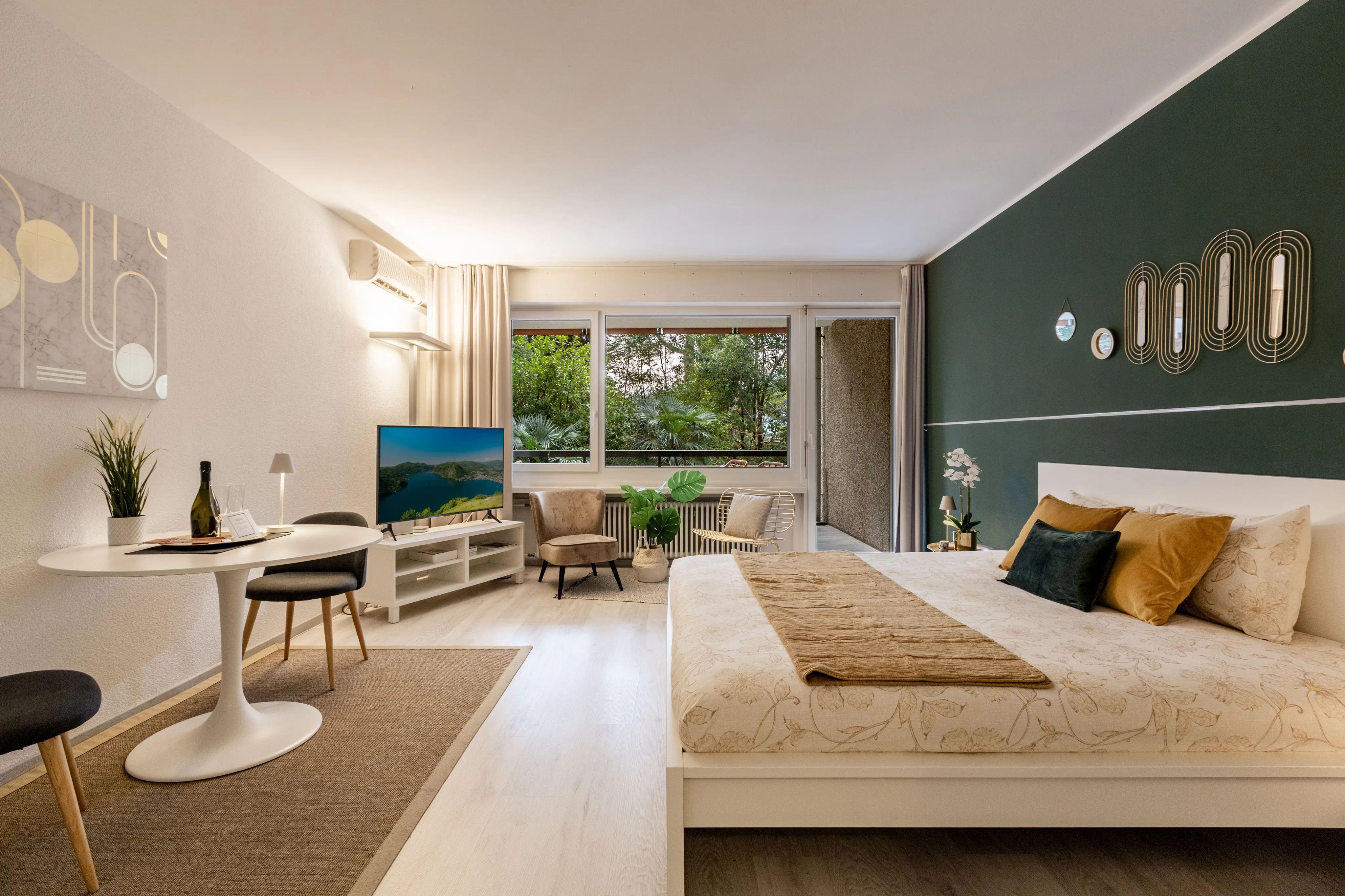
Start with the layout, because that one detail drives everything else. A studio combines your living, sleeping, and kitchen areas into a single open room, with only the bathroom walled off. A one-bedroom adds a separate, enclosed bedroom. That extra wall changes your privacy, your storage options, your monthly utility bill, and the rent you pay. Sort those four out and the right choice usually becomes obvious.
Space and layout
Studios in the U.S. usually run 400 to 600 square feet. The average studio apartment size for newly built units sits near 514 square feet, based on National Multifamily Housing Council figures. One-bedrooms give you more room to spread out. The average 1 bedroom apartment size for newer builds is about 757 square feet, and most land in the 600-to-800 range. More space means room for your things and a guest or two, but also more floor to clean and furnish. Layout matters as much as the number itself. An open studio with tall ceilings and wide windows can feel roomier than a chopped-up one-bedroom of the same size, which is why touring in person beats comparing spec sheets.
Total monthly cost
Rent is only half the equation. A smaller footprint costs less to heat and cool, and renters who downsize from a one-bedroom to a studio often report a lower power bill, which matters through a Houston summer. At an all-bills-paid community like The Passages at Rye 1255, the math gets simpler still. Electricity, water, sewer, trash, and internet are bundled into one flat rent, so a studio's efficiency is already baked into what you pay each month. For a tight budget, that predictability can matter more than the raw rent number. See exactly what's covered on the amenities page.
How Much Do Studios and 1-Bedrooms Cost in Houston?
Averages blur a wide spread here, from budget properties to newer luxury builds. As of July 2026, RentCafe data puts the average Houston studio near $997 a month at 508 square feet, with a one-bedroom around $1,194 at 731 square feet. That's roughly $200 more for about 220 extra square feet. The catch: other trackers report higher numbers, so treat any single figure as a starting point rather than gospel.
| Feature | Studio | 1-Bedroom |
|---|---|---|
| Average Houston rent (Jul 2026) | ~$997/mo | ~$1,194/mo |
| Typical size | ~508 sq ft | ~731 sq ft |
| Bedroom | Combined, open plan | Separate, enclosed |
| Utility cost | Lower, one space to condition | Higher, more rooms |
| Best suited for | Solo renters, tight budgets | Couples, remote work, hosting |
| Bottom line | Cheapest way to live solo | Worth it for space and privacy |
Fewer than half of Houston households own their home, according to U.S. Census Bureau QuickFacts, which keeps steady demand for both studios and one-bedrooms across the city. That competition is why the gap can stay narrow. In July 2026, Zumper and RentHop both listed studios and one-bedrooms in the $1,100 to $1,280 range, so the studio-to-one-bedroom spread is often smaller than renters expect. Concessions are worth asking about too. With new apartment supply reaching the Houston market in 2026, several communities have leaned on move-in specials instead of raising base rents, so the price you actually pay can dip below the advertised number. When you scan Houston rentals, compare the total monthly cost with utilities included, not just the base rent on the listing.
When Does a Studio Make More Sense in the Energy Corridor?
A studio makes the most sense when you live alone, you're watching your budget, and you spend more waking hours out than in. In the Energy Corridor, that fits a lot of people: contract and shift workers at energy majors like Shell, BP, and ConocoPhillips, nurses and staff near Houston Methodist West, and students who want a short commute without splitting rent. Studio apartments in Houston also trim your setup costs, since one open room needs far less furniture than a full one-bedroom. It's also the lowest-commitment way to test a new neighborhood before you lock into more space.
A one-bedroom earns its higher rent when you work from home full time, host regularly, or share the place with a partner. The wall is the whole difference. If you're weighing a studio flat vs 1 bedroom on privacy alone, the one-bedroom wins. Weigh it on total cost, and the studio usually does, and an all-bills-paid studio widens that gap because there's no separate utility bill to budget around. Commute time tends to settle it for shift workers: a studio minutes from the office beats a roomier one-bedroom that adds twenty minutes each way, once gas and time both count. Check the neighborhood map to see how close The Passages at Rye 1255 sits to Highway 6 and I-10.
Frequently Asked Questions
1. Is a studio cheaper than a 1-bedroom in Houston?
Usually, yes. July 2026 RentCafe data shows Houston studios averaging about $997 against $1,194 for a one-bedroom, a gap near $200 a month. That saving grows at an all-bills-paid community, where utilities are folded into rent. Remember that a listed rent and your real monthly cost are two different numbers once power and water are in play.
2. What is the average studio apartment size?
Sizes vary by building and by city, but here's a rough guide:
- Micro-studios: under 350 square feet
- Typical Houston studio: around 508 square feet
- Average newly built U.S. studio: near 514 square feet
- Large studios: 600 square feet and up
Always check the actual floor plan, because two studios with identical square footage can live very differently.
3. Can two people live in a studio apartment?
They can, though it runs tight. Couples share studios comfortably when the unit tops 500 square feet and the layout is smart. If you both work from home or need separate space to unwind, a one-bedroom will feel far less cramped. Check your lease for occupancy limits before you sign.
4. Do studios really save on utilities?
Generally, yes. One open room takes less energy to heat, cool, and light than a one-bedroom with extra walls and outlets, and that adds up during a long Houston summer. At an all-bills-paid property, this stops being something you track at all, since electricity and water are included in your flat rent.
5. Studio flat vs 1 bedroom: which is better for a first-time renter?
For a first move on a solo budget, a studio is often the smoother start. Lower rent, and fewer rooms to furnish or clean. If you already know you need a home office or plan to host often, the extra room in a one-bedroom may be worth the added cost from day one.
The Bottom Line for Houston Renters
The studio vs. 1-bedroom apartment choice comes down to whether you're paying for space or paying for simplicity. For solo renters in Houston's Energy Corridor who want a low, predictable monthly cost, a studio wins more often than not, and bundled utilities make that budget even easier to hold. When a smaller footprint fits how you live, you can start an application online and skip the guesswork on utility bills entirely. The right home is the one that matches your life, not just the cheapest line on a listing.