Quick Answer: A gated apartment community controls who comes and goes through a gate, keypad, or staffed entrance instead of leaving the property open to anyone off the street. Most gated apartment communities charge a bit more in rent, but that premium usually buys quieter streets, controlled parking, and a longer amenity list than an open complex offers.
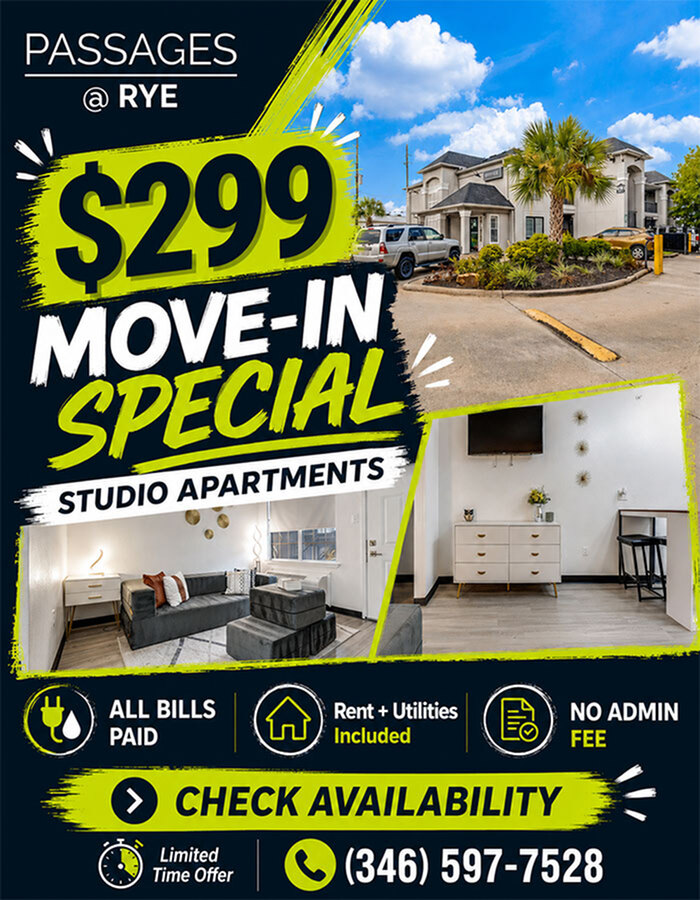
Renters scrolling listings along Houston's Energy Corridor keep running into the same phrase: gated apartment community. It shows up next to a higher price tag, and it's worth knowing exactly what that buys before you sign a lease. The Passages at Rye 1255 is a gated, all-bills-paid studio community off Highway 6 N, and its leasing team fields this exact question from prospective renters almost every week.
What Is a Gated Apartment Community?
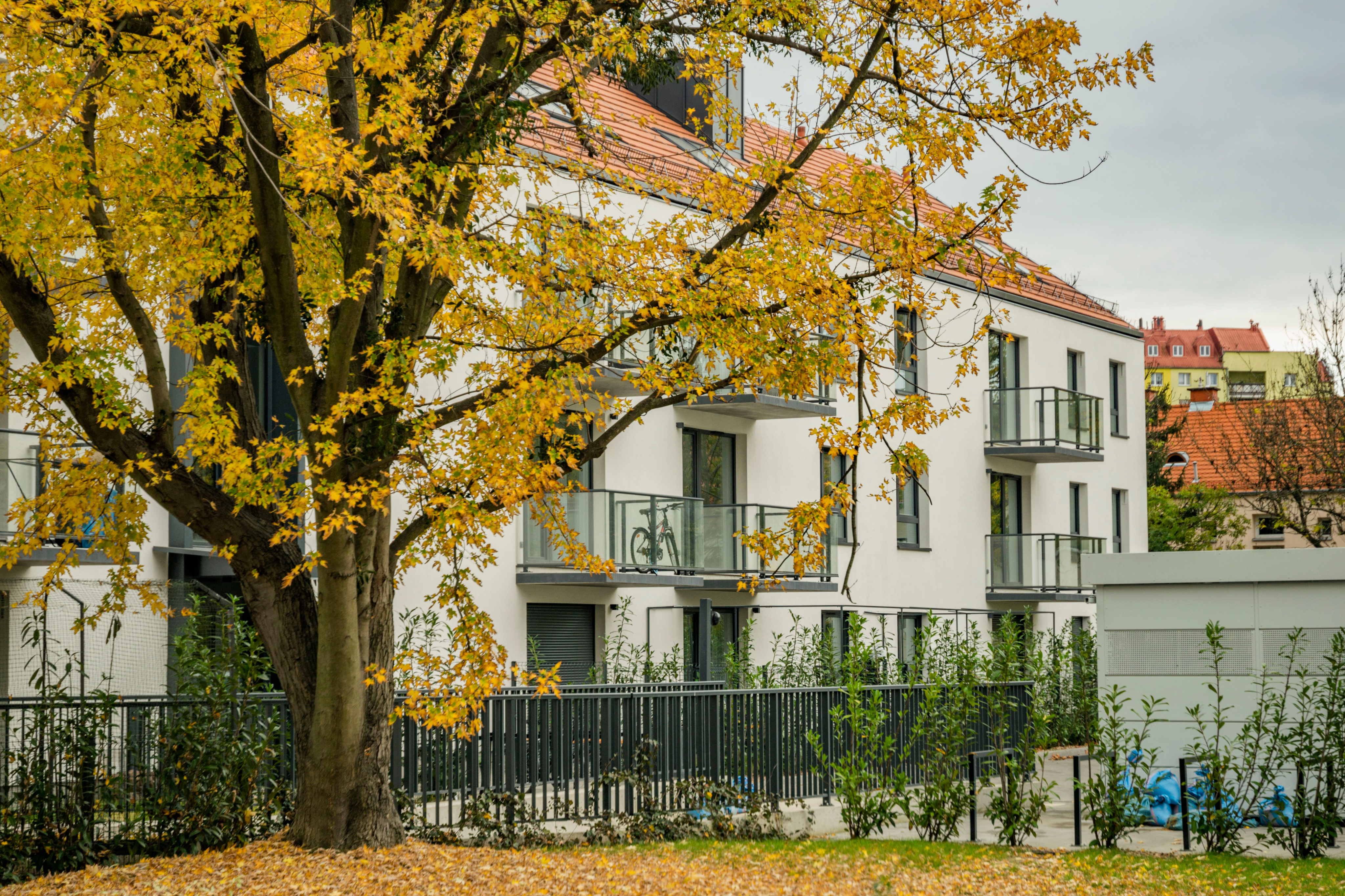
A gated apartment community is a residential complex where a physical barrier, a gate arm, wall, or fence, blocks vehicle and foot traffic at one or two controlled entry points. Residents get a code, fob, or remote to pass through. Visitors either call ahead for a temporary code or check in with someone at the gate. It's the apartment version of a gated neighborhood, just built as one property instead of a subdivision full of houses.
Inside the gate, the property tends to function like its own small private community. Landscaping, parking, and shared spaces stay reserved for people who actually live there. That's a real shift from an open apartment building, where anyone can walk the halls or park in a guest spot uninvited. No two gated residential properties handle this the same way. Some rely on a keypad alone. Others staff the entrance around the clock and pair it with cameras covering the parking lot and community amenities, like a pool, fitness room, or dog park.
The gate itself is only part of the picture. Property managers usually pair it with policies: a limit on overnight guest parking, a rule about propping the gate open, a requirement that vendors and movers check in ahead of time. Those small rules are what actually make a gated apartment complex feel different from a regular one. A gate with no enforcement behind it is just a fence with a keypad.
Are Gated Apartment Communities Actually Safer?
Mostly, yes. A monitored entrance cuts down on the drive-by opportunists, door-to-door solicitors, and random foot traffic that hit open complexes every day. It won't stop someone determined to get in. But it removes the easy targets. Apartments with security guards or a staffed gate add a second layer on top of that: a person who notices when something looks off and can act on it in real time.
National crime data backs this up, in a limited way. The FBI's Crime Data Explorer tracks property crime, burglary, larceny, and motor vehicle theft at the local level, and researchers comparing gated and non-gated properties generally find fewer opportunistic property crimes behind a controlled entrance. The effect is real but modest. A gate stops a stranger from wandering through. It doesn't stop a planned break-in, and no property manager should tell you otherwise.
Staffing changes the math further. A gate with a live attendant during peak hours tends to deter more than an unmanned keypad that anyone can tailgate through behind another car. Ask during a tour how the entrance actually works after dark, not just during the daytime showing. That one question tells you more than the brochure will.
At The Passages at Rye 1255, that layered apartment security shows up in the property's amenities, from the gated entry itself down to the lit walkways and the dog park that stays fenced off from the parking areas. It's the kind of detail that matters more at 11 p.m. after a shift than it does on a sunny afternoon tour.
Gated vs. Non-Gated: Is the Extra Rent Worth It?
Usually, yes, if you'll actually use what you're paying for. A 2025 analysis of more than 25,000 Apartments.com listings found gated communities add roughly $148 a month, about 9.4 percent, to average rent nationwide. That's a meaningful bump on a studio budget, so it helps to see the trade-off laid out side by side.
| Feature | Gated Apartment Community | Non-Gated Apartment |
|---|---|---|
| Entry | Gate, keypad, or staffed guard | Open access, no barrier |
| Average rent premium | About $148/month more (9.4%), per 2025 rental listing data | Baseline market rent |
| Guest and delivery access | Code, call box, or temporary pass | Walk in anytime |
| Opportunistic crime | Generally lower | Varies by location |
| Best fit | Shift workers, families, renters who value privacy | Renters prioritizing lowest cost and simplest access |
For a lot of renters, especially shift workers coming home at odd hours or parents whose kids play outside, the private community feel outweighs the extra hundred dollars or so a month. Houston's Energy Corridor alone employs more than 100,000 people across staggered shifts, and a controlled entrance matters differently to someone getting home at 2 a.m. than it does to someone on a standard nine-to-five. That's the trade you're making: dependable apartment security features against a lower monthly rent. Neither choice is wrong. It comes down to what you'll actually notice day to day.
Frequently Asked Questions
1. What is a gated apartment complex, exactly?
A gated apartment complex is a rental property that limits entry to a single controlled point, usually a gate arm, wall opening, or staffed booth. Residents pass through with a code or fob. Guests either buzz in, get a temporary code, or check in with an attendant. The rest of the property, parking, amenities, and walkways, sits behind that one entry.
2. Do gated community apartments cost more to rent?
Yes, typically. Industry data from 2025 put the average premium at roughly $148 a month, or about 9.4 percent above non-gated units, though the gap varies a lot by city and by how much staffing the gate actually gets. In cheaper metro areas the difference can run lower; in dense, high-demand markets it climbs higher.
3. What apartment safety features come with a gated complex?
Coverage varies by property, but most gated complexes combine several of the following:
- A gate arm, wall, or staffed entrance limiting vehicle access
- Keypad or fob entry for residents, with temporary codes for guests
- Security cameras covering the entrance and parking areas
- Lit walkways and common areas
- On-site staff or a courtesy patrol during set hours
4. What are the real gated community benefits for renters?
Beyond the security angle, the gated community benefits renters notice most are quieter streets, less cut-through traffic, and controlled parking that keeps spots available for actual residents. Families tend to value it for kids riding bikes safely. Shift workers value it for coming home late without dodging strangers in the parking lot. Some renters also mention fewer package thefts, since delivery drivers and strangers can't just walk the property looking for an unlocked mail room.
5. Is a gated neighborhood-style complex worth it for families?
For most families, yes. Slower traffic, a single monitored entrance, and shared amenities reserved for residents make daily routines calmer, especially for kids who play outside or walk to a mailbox alone. It functions much like a gated neighborhood of single-family homes, just condensed into one property with shared upkeep instead of individual yards.
Conclusion
A gated apartment community isn't the right fit for every renter, but if you value quiet streets, controlled parking, and a place where you actually recognize your neighbors, it's usually worth the extra line item on the lease. The Passages at Rye 1255 pairs its gated entry and dog park with studio floor plans right off Highway 6 N in the Energy Corridor, an easy commute for most Houston energy and healthcare workers. Want to see it in person? The map and directions page will get you there.